
Costa Maritime

Brasil --:-- · 24/7
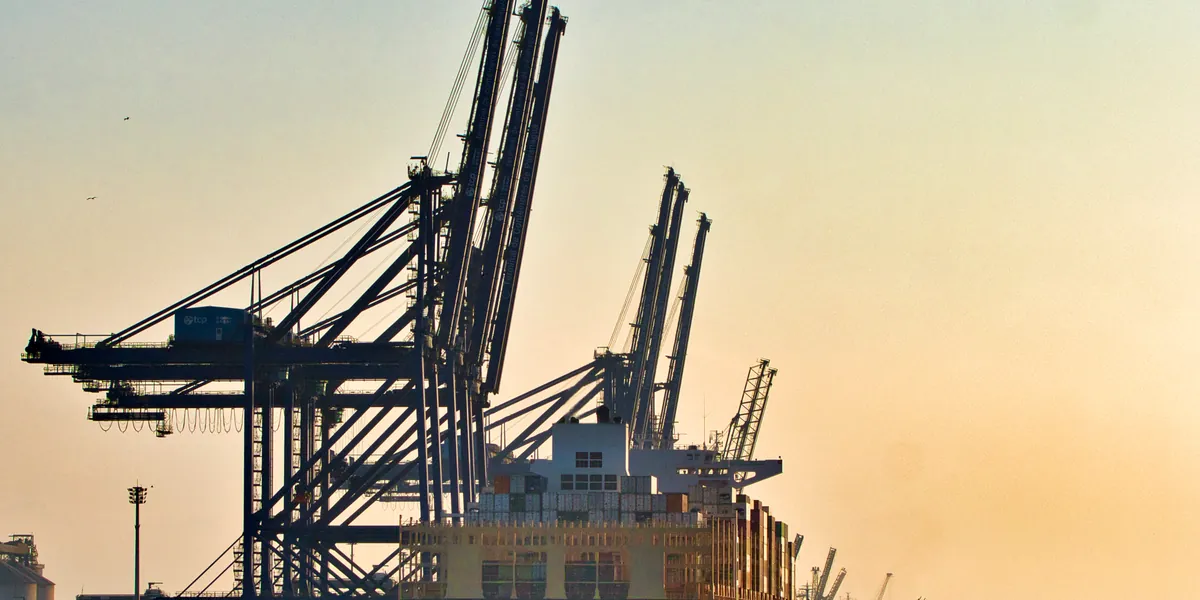
Container cranes at the Paranaguá container terminal at sunset, with a container ship alongside.
Port call guide · Paraná, Brazil

Port of Paranaguá

The Port of Paranaguá, in Paraná, is run by Portos do Paraná (APPA), the state company that also runs Antonina. In 2025 the two ports handled a record 73.5 million tonnes, led by soybean, soybean meal and corn exports, fertiliser imports and 1.66 million TEU of containers. Ships enter through the Canal da Galheta, which takes up to 13.30 m of draft and ships up to 368 m LOA.

25°30'00"S 48°31'00"W28

Photo: Paranaguá Commercial Harbor by CaptainDarwin, CC BY-SA 4.0. Cropped and darkened by Costa Maritime; this version is CC BY-SA 4.0.

Port of Paranaguá at a glance

Key facts for planning a call at the Port of Paranaguá, with numbered sources
Port authority(Autoridade Portuária (Portos do Paraná, APPA))

Administração dos Portos de Paranaguá e Antonina (APPA), trading as Portos do Paraná. It is a state public company under Paraná's Department of Infrastructure and Logistics and holds a delegation agreement with the federal government. It runs the ports of Paranaguá and Antonina.1, 2

www.portosdoparana.pr.gov.br

Harbour master(Capitania dos Portos do Paraná, NPCP-PR)

Capitania dos Portos do Paraná (CPPR), based in Paranaguá and reporting to the Commander of the 8th Naval District in São Paulo. It is the Maritime Authority's agent responsible for pilotage zone ZP-17, can declare the bar or the port impracticable (closed), and issues the local rules (NPCP-PR 2021).3, 4, 5

Pilotage(Praticagem, Zona de Praticagem ZP-17)
  • Zona de Praticagem ZP-17, Paranaguá e Antonina. As of 21 Sep 2026 (NORMAM-311/DPC), pilotage is compulsory in this zone, between the pilot waiting position and the berth, for Paranaguá, Ponta do Félix, Antonina and the Petrobras, Cattalini and Fospar terminals.
  • NORMAM-311 item 4.4.3 lists the exempt vessels, including Brazilian-flag ships up to 2,000 GT, foreign-flag ships up to 500 GT, and foreign-flag ships up to 2,000 GT chartered by a Brazilian company and commanded by a Brazilian seafarer; the Maritime Authority can cancel an exemption at a given port.
  • An exempt ship must apply to the Capitania at least 5 working days ahead (NPCP-PR item 0413).
  • The port's traffic rules say the Canal da Galheta may be entered only with a pilot on board, apart from some small coastal and offshore support vessels with a Brazilian master and prior Maritime Authority authorisation (NTM 7.1.3).
  • Pilot companies: Paranaguá Pilots and Transturmar. Pilots work on VHF channel 12.4, 5, 6, 3
Maximum permissible draft(Calado máximo (NTM Rev. XXIV))
  • As of 11 Sep 2026, the governing document is the port traffic rules (NTM Rev. XXIV, Portaria nº 164/2026/APPA). Its maximum drafts are set by the port authority with the Capitania and the pilots. The NTM tables are headed 'calado máximo'; the Capitania's rules (NPCP-PR item 0501) treat these published operating drafts as the recommended maximum draft (calado máximo recomendado, calado operacional). Tide heights are above DHN chart datum (NR).
  • Channel: 13.30 m in all stretches of the Canal da Galheta between buoy pairs 1-2 and 28A-29, in the evolution basin, and through the main channel (buoys 28A, 29, 30, 31) or the Surdinho south channel. The other alternative channels into the evolution basin allow 8.0 m (north channel) and 8.50 m (NE/SW and northeast channels). Tide needed at 13.30 m:
  • Bulk carriers and tankers: 12.80 m at zero tide; 13.30 m needs +0.50 m of tide (positive tide required at the Galheta bar).
  • Container, passenger and Ro-Ro ships up to 300 m LOA and 43 m beam: 13.00 m at zero tide; 13.30 m needs +0.30 m.
  • Container, passenger and Ro-Ro ships of 300-368 m LOA and up to 52 m beam: 12.80 m at zero tide; 13.30 m needs +0.50 m.
  • Berths:
  • 13.30 m: 201, 202, 204, 209, 211, 212, 213, 216, 218 and Cattalini 143.
  • 13.10 m: 214 and Fospar 200. Berthing at Fospar 200 needs at least 0.50 m of tide at 12.80 m and 0.80 m at 13.10 m.
  • 12.75 m: Cattalini 144. At 12.10-12.75 m, berthing and unberthing need 3 tugs with at least 150 t of bollard pull in total, a flood current of 0.5 kn or less and wind of 15 kn or less.
  • 208: 12.50 m or 13.30 m, depending on the bollard section.
  • 12.30 m: 215. 12.00 m: 205.
  • 206: 11.00 m or 12.00 m, depending on the bollard section.
  • 11.60 m: PPGL 141 and 142. At the inner berth 142, ships drawing more than 10.60 m need at least 1 m of tide to berth or unberth.
  • Fospar 200A: 11.00 m by day, 10.50 m by night.
  • 9.50 m: 219 (Dolfins).
  • 9.15 m: Ponta do Félix 113 and 114. Ships drawing more than 9.0 m need at least 1.40 m of tide for the whole transit of the access channel and turning basin. Ships drawing more than 8.0 m must first anchor inside the bay and pass the access channel on a high water of at least 1.7 m.
  • Positive tide over the whole transit is required at 12.70 m draft or more for any manoeuvre at 212-214 and for unberthing at 201 and 204.3, 2, 7, 5
Maximum vessel size(Comprimento (LOA) e boca)
  • As of 11 Sep 2026 (NTM Rev. XXIV, item 5.1.1), maximum LOA and beam by place:
  • Canal da Galheta and Paranaguá commercial quay: 368 m and 52.0 m.
  • Berth 219 (Dolfins): 200 m and 38.0 m.
  • PPGL liquid bulk pier: external 190 m and 40.0 m; internal 190 m and 35.0 m.
  • Cattalini pier: external 258 m and 40.0 m; internal 190 m and 35.0 m.
  • Fospar pier: external 290 m and 40.0 m; internal 200 m and 35.0 m.
  • Ponta do Félix: 200 m and 34.0 m.
  • Larger ships are allowed only by exception, at the Maritime Authority's discretion after consulting the pilots. The NTM sets no DWT limit.3
Air draft(Calado aéreo dos carregadores de navios)

As of 15 Apr 2026, the port authority's berthing rules (Portaria nº 040/2026/APPA) list a shiploader air draft (calado aéreo) for the bulk loading berths: 18 m at berths 201, 212, 213 and 214; 17 m at berth 206; 16.5 m at berth 204. The rules give no reference point or tide condition for these figures; confirm the ship's air draft with the agent before fixing.8, 9

Tides(Marés e correntes)
  • Semidiurnal with diurnal inequalities, plus meteorological effects and effects of the bay's shape.
  • In Paranaguá Bay, spring tides reach a mean of about 2.20 m above DHN chart datum (NR) and neap tides about 1.00 m.
  • At springs the tidal stream reaches about 4.0 kn at the Galheta bar, sometimes across the channel, and 1.3-2.4 kn in port; at neaps it is about 1.4 kn in port.
  • Predictions are in the DHN tide tables (tábuas de marés) from the Centro de Hidrografia da Marinha.3
Berths and terminals(Berços e terminais)
  • On the Paranaguá commercial quay, the port traffic rules (NTM Rev. XXIV, 11 Sep 2026) list berths 201, 202, 204, 205, 206, 208, 209, 211, 212, 213, 214, 215, 216 and 218, plus berth 219 (Dolfins).
  • Solid bulk exports (grain, meal and sugar): 201, 204 and 206, and the Export Corridor East at 212, 213 and 214 (grain and meal).
  • Solid bulk discharge (fertilisers): 208, 209 and 211.
  • Passengers: berth 205.
  • Containers: Terminal de Contêineres de Paranaguá (TCP), with priority for full container ships at berths 215, 216 and 218.
  • Liquid bulk: public pier PPGL (141, 142) and private Cattalini pier (143, 144).
  • Fertilisers: Fospar pier (200, 200A).
  • Porto Ponta do Félix: berths 113 and 114.
  • In 2025 Portos do Paraná (Paranaguá and Antonina) handled soybean exports of 14.6 million t, fertiliser imports of 11,609,133 t (a record), soybean meal exports of 6.5 million t, corn (5,094,470 t) and 1,662,370 TEU of containers.3, 8, 10, 11
Clearance authorities(Receita Federal, ANVISA, Polícia Federal e VIGIAGRO)
  • Customs: Alfândega da Receita Federal no Porto de Paranaguá (ALF/PGA), Av. Cel. José Lobo, 2300, Paranaguá.
  • Health: the ANVISA Paranaguá post, Av. Coronel José Lobo, 2300, Oceania, grants free pratique (livre prática) and coordinates the port's public health emergency contingency plan. Ships in quarantine use anchorage Área 7 (LOA up to 336 m, draft up to 10.0 m). Área 5 serves ships visited by the health or other authorities.
  • Immigration: Polícia Federal in Paranaguá. At ports the PF handles maritime police work, migration control and checks on people, vessels and crews.
  • Agriculture: VIGIAGRO, Serviço de Vigilância Agropecuária Internacional de Paranaguá (SEV-PNG), Av. Portuária, s/n, Dom Pedro II, next to the TCP container terminal.12, 13, 3, 14, 15, 16
Crew change airport(Aeroporto Internacional Afonso Pena (Curitiba))
  • Afonso Pena International Airport, Curitiba (CWB), in São José dos Pinhais. It has international flights, including TAP to Lisbon and routes to Buenos Aires, Santiago and Montevideo, and domestic links to São Paulo, Campinas, Rio de Janeiro and Brasília.
  • The port is about 85 km away by road, about 1 h 10 min without traffic (approximate OSRM route). The BR-277 highway links Paranaguá and Curitiba.17, 18, 19, 20
Dredged depth and access channel(Profundidades de dragagem (nível de redução da DHN))
  • As of 11 Sep 2026 (NTM Rev. XXIV, item 5.2), dredging depths in metres below DHN chart datum:
  • Canal da Galheta outer area (between buoy pairs 1-2 and 7-8): 16.50 m.
  • Inner area between pairs 7-8 and 15-16: 15.50 m.
  • Inner area between pairs 15-16 and 28A-29: 14.50 m.
  • Evolution basin: 14.50 m.
  • Commercial quay berths 201-218: 13.80 m.
  • Cattalini: 143 14.50 m, 144 13.00 m.
  • Fospar: 200 14.00 m, 200A 13.00 m.
  • PPGL 141 and 142: 12.00 m.
  • Berth 219: 10.00 m.
  • Ponta do Félix: 9.50 m.
  • The main entrance is the Canal da Galheta, 150/200 m wide.3, 20
Anchorages(Áreas de fundeio)
  • As of 11 Sep 2026 (NTM Rev. XXIV, chapter VI, with WGS84 boxes):
  • Área 11 (formerly Área 12): outer anchorage outside the bar, per chart 1820, for ships waiting for orders to enter Paranaguá Bay.
  • Área 10 (formerly Área 11): emergencies or ships waiting for weather to cross the bar; up to 298 m LOA and 9.9 m draft.
  • Inside the bay:
  • Área 6 Alfa, for the largest ships: bulk carriers up to 230 m at 13.30 m or 230-300 m at 13.00 m; container ships up to 336 m at 12.8 m; up to 368 m at 12.8 m at one set point.
  • Área 6 Bravo: under 270 m, 10.4 m.
  • Área 9: up to 336 m, 9.50 m (Alfa) or 10.00 m (Bravo).
  • Área 8: up to 256 m, 8.3 m.
  • Área 7: quarantine, dangerous cargo and bunkering; up to 336 m and 10.0 m.
  • Área 5: health or authority visits; under 200 m, up to 11.4 m.
  • Áreas 2, 3 and 4: smaller ships, bunkering and ships waiting for Ponta do Félix.
  • Área 1: barges only.
  • Ships bound for the Canal da Galheta wait in order of anchoring date and time. To keep ships manoeuvrable as they enter and leave the Canal da Galheta, the Capitania prohibits anchoring in an area set out in Anexo 5-B of its rules (NPCP-PR 2021, item 0505, as amended to 27 Sep 2024).3, 5
Restrictions(Restrições operacionais)
  • As of 11 Sep 2026 (NTM Rev. XXIV):
  • Time of day: the Capitania's rules set no general time restriction on navigation or berthing (NPCP-PR 2021, item 0503, as amended to 27 Sep 2024).
  • Night: the Galheta bar is open at night with the same maximum drafts as by day, if the channel buoys and cardinals work, visibility is at least 1.5 nm, and sea and wind are Beaufort 5 or less.
  • Fospar 200A: 10.50 m at night, 11.00 m by day.
  • Berth 219 (Dolfins): day and night, at slack water or just before it, with wind up to 10 kn, current up to 0.5 kn to berth or 0.7 kn to unberth, and at least 3 tugs.
  • Ships over 306 m LOA or 45.20 m beam: 2 pilots and at least 3 azimuth tugs.
  • Container, passenger and Ro-Ro ships of 345-368 m: visibility of at least 4.0 nm, sea and wind of Beaufort 4 or less, and current near zero or at most 0.4 kn ebb at buoys 28A-31 or the Surdinho.
  • Container ships over 13.00 m draft, or over 300 m LOA or 43 m beam drawing more than 12.80 m: a free berth must be guaranteed, with prior acceptance of a return to the bar if it is not, and 4 tugs for turning.
  • Export Corridor 212-214: unberthing on the ebb only with current up to 0.5 kn; ships over 11.40 m unberthing on the ebb must sail and may not go to anchor.
  • Passing: not allowed between buoy pairs 1A/2A and 05/06. Container ships over 300 m LOA or 43 m beam drawing more than 12.8 m may not pass between pairs 1/2 and 23/24.
  • Speed: 14 kn in the access channel, 12 kn between pairs 9-10 and 13-14 (1 kn tolerance), 10 kn over ground in the evolution basin.
  • Thrusters: not allowed for berthing or unberthing without port authority approval, except for container ships at 216 and 218.
  • Buoy failure: if one of buoys 28A-31 or the north or south cardinal fails, that channel takes only ships under 245 m LOA and/or under 8.50 m draft.
  • Tows: need Maritime and Port Authority approval; the agent must give the ETA 72 h ahead, and the request to the Capitania is due at least 5 working days ahead (NPCP-PR item 0508).3, 5
Tugs(Rebocadores)
  • As of 11 Sep 2026 (NTM Rev. XXIV, chapter IX), minimum tugs by gross tonnage:
  • Up to 5,000 GT: 1 tug.
  • 5,001-90,000 GT: 2 tugs.
  • 90,001-130,000 GT: 3 tugs.
  • 130,001-180,000 GT: 4 tugs.
  • Each band also sets a minimum total bollard pull in ballast and loaded: 14/23 t for the smallest band, 182/211 t for the largest.
  • Terminal tables:
  • TCP: 2-4 tugs, 100-240 t, by LOA and draft.
  • Export Corridor 212-214, and unberthing at 201 and 204: 2-3 tugs, 110-160 t.
  • Cattalini: 2-3 tugs, 100-150 t.
  • Fospar 200: 3 tugs and 160 t over 12.80 m draft and 40,000 GT.
  • Berth 219 needs at least 3 tugs, and tugs are compulsory at Ponta do Félix. Tug companies listed by the port authority: Sulnorte, Wilson Sons, Saam Towage, Svitzer Brasil, Camorim and Navemestra.3, 21
Pilot boarding(Ponto de espera de prático)
  • Pilot waiting position (ponto de espera de prático) for ZP-17: 25°38'38"S 048°15'06"W (NORMAM-311/DPC, Anexo 4-B, as of 21 Sep 2026).
  • The port traffic rules place the pilot boarding and landing position on Brazilian chart DHN 1820, and the compulsory pilotage zone covers the passage between that position and the berth or anchorage.
  • Outbound, the pilot stays on board until the ship reaches the pilot waiting area set by the Maritime Authority, and the master may not release the pilot before it.
  • Container ships over 300 m LOA or 43 m beam drawing more than 12.80 m must drop the pilot more than 1.0 nm southeast of buoy pair 1-2.
  • Pilots work on VHF channel 12, and agents request manoeuvres online through the Paraná pilots' system.4, 3, 5, 22
Weather limits(Limites de vento, mar e visibilidade)
  • As of 11 Sep 2026 (NTM Rev. XXIV).
  • Canal da Galheta: visibility at least 1.5 nm, sea up to Beaufort 5 and wind up to Beaufort 6. At night, sea and wind up to Beaufort 5.
  • Berthing and unberthing: visibility at least 1.5 nm, wind up to Beaufort 5 (21 kn).
  • Stricter wind limits: 18 kn for container ships over 13.00 m draft, or over 300 m LOA or 43 m beam drawing more than 12.80 m; 15 kn and at most 0.5 kn of flood at Cattalini 144 at 12.10-12.75 m; 15 kn at Ponta do Félix; 10 kn at berth 219.
  • Two ships passing in the channel: recommended limits of 15 kn wind and 1 kn current.
  • Closures: the Capitão dos Portos can close the bar with wind above Beaufort 7 (sea state 5 Douglas) and the port with wind above Beaufort 6 (sea state 4 Douglas). Visibility under 1.0 nm is also a closure condition (NPCP-PR item 0418, repeated in NTM 8.11).
  • Cold fronts with Beaufort 4 or more and waves over 1.5 m can reduce the recommended maximum draft in the outer Galheta channel.3, 5
Bunkers, fresh water and waste reception(Combustível, água e resíduos)
  • Bunkers: suppliers must be credentialed with the port authority's environment directorate. Ships taking bunkers anchor as close as possible to the evolution basin, up to buoy pairs 19-20, and ships with cargo operations have priority over bunker-only calls. The port authority lists credentialed bulk fuel suppliers for sea-to-sea and land-to-sea delivery, and credentialed fresh water suppliers.
  • Waste: garbage leaves the ship only through companies authorised by IAT, IBAMA, the port authority, Receita Federal and ANVISA. No sewage or direct discharge into the sea is allowed in port. The authority lists credentialed ship-waste collectors, including one for sewage only.
  • Ballast water: NORMAM-401 applies, and discharging ballast tank sediment is prohibited.3, 23, 24, 25
Line-up(Programação de navios (line-up))
  • Portos do Paraná publishes the general line-up and the Grain Export Corridor line-up in APPA Web.
  • Berthing follows the Regulamento de Programações, Operações e Atracações (Portaria nº 040/2026/APPA, 15 Apr 2026).
  • The agent must announce the call in APPA Web at least 4 days before arrival (20 days for passenger berth 205).26, 27, 8

APPA Web line-up

Main cargo and throughput(Movimentação de cargas)

2025: 73,506,480 t, a record (73.5 million t, up 10.1% on 2024), for the ports of Paranaguá and Antonina combined, counting exports and imports. Containers: 1,662,370 TEU.11

For planning reference only, not for navigation. Drafts depend on tide, under-keel clearance, ship type and the current port authority and Capitania dos Portos rules; the pilots and the Capitania have the final word. Confirm before fixing the vessel. Our operations desk can obtain the current figure from the pilots.

Planning a call at Paranaguá

  • The Canal da Galheta allows 13.30 m, but bulk carriers and tankers need 0.50 m of tide to reach it and container ships up to 300 m LOA need 0.30 m. Tide heights are above DHN chart datum.
  • Each berth has its own maximum draft: 13.30 m at the deepest commercial berths and 9.15 m at Ponta do Félix, where ships drawing more than 9.0 m need at least 1.40 m of tide for the whole transit.
  • Container, passenger and Ro-Ro ships between 345 m and 368 m need visibility of at least 4.0 nm, sea and wind of Beaufort 4 or less and near-zero current.
  • Thrusters may not be used for berthing or unberthing without port authority approval, except for container ships at berths 216 and 218.
  • Tug numbers follow gross tonnage: 2 tugs between 5,001 and 90,000 GT, 3 up to 130,000 GT and 4 up to 180,000 GT, with terminal tables on top.

Before arrival, your agent announces the call in APPA Web at least 4 days ahead and arranges free pratique with the ANVISA post in Paranaguá. Bunker suppliers must be credentialed with the port authority, and ships taking bunkers anchor near the evolution basin.

Port of Paranaguá: frequently asked questions

What is the maximum draft at the Port of Paranaguá?

As of 11 September 2026, the port traffic rules (NTM Rev. XXIV) allow 13.30 m in the Canal da Galheta. Bulk carriers and tankers need 0.50 m of tide for it (12.80 m at zero tide); container, passenger and Ro-Ro ships up to 300 m LOA and 43 m beam need 0.30 m (13.00 m at zero tide). The deepest berths take 13.30 m. Tide heights are above DHN chart datum, and the pilots confirm the draft for each call.

What are the ship size limits at the Port of Paranaguá?

The Canal da Galheta and the commercial quay take ships up to 368 m LOA and 52.0 m beam. Smaller limits apply at berth 219 (200 m and 38.0 m), the liquid bulk piers and Ponta do Félix (200 m and 34.0 m). The port sets no DWT limit.

Is pilotage compulsory at the Port of Paranaguá?

Yes. Pilotage zone ZP-17 (Paranaguá e Antonina) makes pilotage compulsory between the pilot waiting position and the berth, with limited exemptions, and the Canal da Galheta may be entered only with a pilot on board. The pilot companies are Paranaguá Pilots and Transturmar, on VHF channel 12.

What wind and visibility limits apply at the Port of Paranaguá?

In the Canal da Galheta: visibility of at least 1.5 nm, sea up to Beaufort 5 and wind up to Beaufort 6, with both at Beaufort 5 at night. Berthing and unberthing need wind up to Beaufort 5 (21 kn). The Capitão dos Portos can close the bar with wind above Beaufort 7 and the port with wind above Beaufort 6.

Which airport do crews use for a crew change at Paranaguá?

Afonso Pena International Airport in Curitiba (CWB), about 85 km by road, around 1 h 10 min without traffic, via the BR-277 highway. It has international flights, including TAP to Lisbon.

Working with Costa Maritime at Paranaguá

At Paranaguá, a vetted local partner attends the vessel on our behalf. You deal only with Costa Maritime: we prepare your PDA and FDA and remain your single point of contact.

Proforma disbursement account (PDA)

Send the vessel type, GT and NT, LOA, beam and drafts, the purpose of the call, the cargo and the expected days in port, and we prepare your proforma disbursement account.

Request a PDA for Paranaguá

The PDA is an estimate based on the particulars you send and the tariffs and exchange rate in force; the final disbursement account (FDA) reflects the actual call.

Sources

  1. Who we are, Portos do Paraná (APPA). Accessed 21 October 2026.
  2. Portaria nº 164/2026/APPA, Administração dos Portos de Paranaguá e Antonina, 11 September 2026. Accessed 21 October 2026.
  3. NTM Edição 2026, Revisão XXIV, Administração dos Portos de Paranaguá e Antonina, 11 September 2026. Accessed 21 October 2026.
  4. NORMAM-311/DPC (edition replacing the one of 30 Apr 2026; Mod. 5, Portaria DPC/DGN/MB nº 206, 21 Sep 2026), Marinha do Brasil, Diretoria de Portos e Costas (DPC), 21 September 2026. Accessed 21 October 2026.
  5. NPCP-PR 2021 (Portaria nº 67/CPPR, 2 Dec 2021; modification record up to Mod 5, Portaria nº 41/CPPR, 27 Sep 2024), Marinha do Brasil, Capitania dos Portos do Paraná, 27 September 2024. Accessed 21 October 2026.
  6. Zonas de Praticagem (entry 17, ZP Paranaguá e Antonina), Praticagem do Brasil (Conselho Nacional de Praticagem). Accessed 21 October 2026.
  7. Calados, Portos do Paraná (APPA). Accessed 21 October 2026.
  8. Regulamento de Programações, Operações e Atracações de Navios, Edição 2026 (Portaria nº 040/2026/APPA), Administração dos Portos de Paranaguá e Antonina, 15 April 2026. Accessed 21 October 2026.
  9. Portaria nº 040/2026/APPA (updates the Regulamento; revokes Portaria nº 069/2025/APPA of 2 May 2025), Administração dos Portos de Paranaguá e Antonina, 15 April 2026. Accessed 21 October 2026.
  10. Dados Gerais, Portos do Paraná (APPA). Accessed 21 October 2026.
  11. Portos paranaenses lideram movimentação entre os maiores do Brasil em 2025, Portos do Paraná (APPA), 14 January 2026. Accessed 21 October 2026.
  12. ALF/PGA, Alfândega da Receita Federal no Porto de Paranaguá, Receita Federal. Accessed 21 October 2026.
  13. Paraná (Anvisa units map), Posto de Paranaguá, ANVISA, 9 July 2025. Accessed 21 October 2026.
  14. PF cumpre mandado de prisão em Paranaguá/PR, Polícia Federal, 8 July 2026. Accessed 21 October 2026.
  15. Entenda quais órgãos atuam no funcionamento dos portos e terminais portuários, Ministério de Portos e Aeroportos, 27 July 2026. Accessed 21 October 2026.
  16. DIGRV-S, Divisão de Gestão Regional do Vigiagro Sul (units list), Ministério da Agricultura e Pecuária (MAPA), 16 October 2026. Accessed 21 October 2026.
  17. Aeroporto Internacional Afonso Pena - CWB, Airport operator site (Motiva / CCR Aeroportos; notice of sale to ASUR). Accessed 21 October 2026.
  18. Destinos e conexões, Airport operator site (Motiva / CCR Aeroportos). Accessed 21 October 2026.
  19. OSRM public routing API, CWB terminal area to the WPI port point, Project OSRM (computed estimate), 21 October 2026. Accessed 21 October 2026.
  20. Acessos, Portos do Paraná (APPA). Accessed 21 October 2026.
  21. Lanchas e Rebocadores, Portos do Paraná (APPA). Accessed 21 October 2026.
  22. SINPRAPAR (Sindicato dos Práticos do Paraná), Solicitar pedido de manobra, SINPRAPAR, pilots' union. Accessed 21 October 2026.
  23. Suprimentos de Combustíveis e de Químicos, Portos do Paraná (APPA). Accessed 21 October 2026.
  24. Fornecimento de Água Potável, Portos do Paraná (APPA). Accessed 21 October 2026.
  25. Retirada de Resíduos da Faixa Portuária e de Embarcações, Portos do Paraná (APPA). Accessed 21 October 2026.
  26. Operações Portuárias (menu with Line-Up Geral and Line-Up do COREX links), Portos do Paraná (APPA). Accessed 21 October 2026.
  27. Line Up Retroativo (APPAWeb), Administração dos Portos de Paranaguá e Antonina, 21 October 2026. Accessed 21 October 2026.
  28. World Port Index, Paranagua (port no. 12980), US National Geospatial-Intelligence Agency (World Port Index). Accessed 21 October 2026.

Last reviewed: October 2026

Planning a call at Paranaguá?

Send the vessel particulars and the dates. We prepare the PDA and coordinate the call with one point of contact.