

A vessel without lubricating oil to operate under her own power needed assistance to berth and receive the product. On the Amazon River, an anchor incident required tug escort for a vessel’s passage. In northern Brazil, a grounded vessel needed an assessment before towage preparations could proceed.
Costa Maritime worked on these cases by coordinating technical information, tug operators and specialist support. Each required a different response, shaped by the vessel’s condition and the resources available.
We coordinate tug services through contractual arrangements with major towage operators in Brazil. Our response team includes a Salvage Master qualified to operate within the jurisdiction of all Brazilian Harbour Master’s Offices, supported by our 24/7 operations desk.
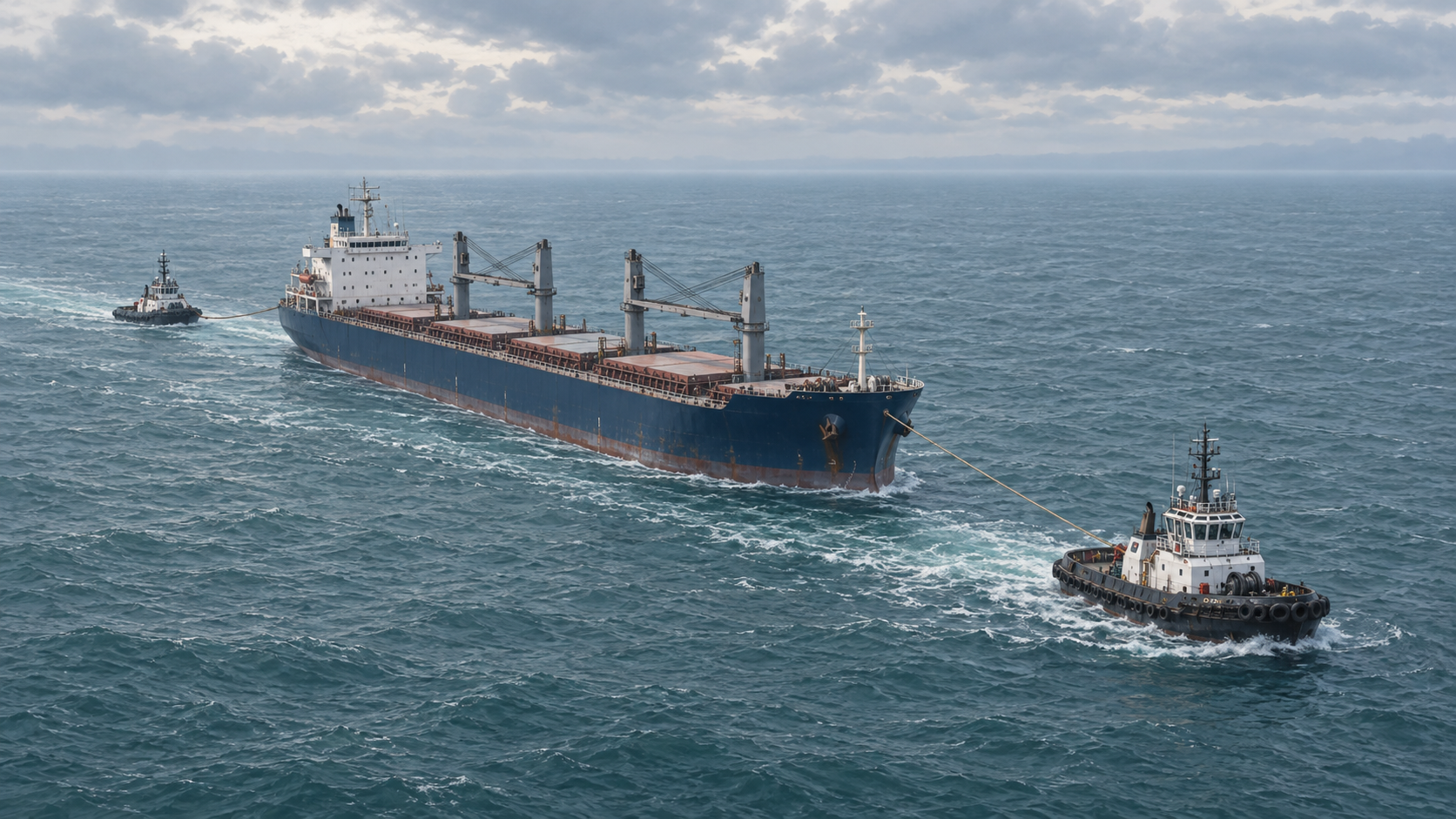
Tug escort on the Amazon River
An anchor incident affected a vessel’s planned passage on the Amazon River. Discussions with the owner addressed her class status, the missing equipment and the conditions for proceeding.
Costa Maritime worked with a regional operator to arrange tug escort. We coordinated the scope of assistance and mobilization to the meeting point around the vessel’s intended movements.
The owner, managing the incident from overseas, needed to know which tug could attend, where it would join and what assistance it would provide. Those arrangements depended on the vessel’s reported technical condition and the local requirements for the passage. Changes to her movements also required adjustments to the escort.
Assisted berthing for a vessel without lubricating oil
The vessel was without the lubricating oil needed to operate under her own power. Her technical statements explained that using the main engine could cause a loss of oil pressure.
Replenishment at the anchorage was unavailable under the arrangements considered for that call. To receive the oil, the vessel needed a suitable berth and assistance that accounted for her propulsion restriction.
Costa Maritime coordinated the technical information and berthing preparations with the owner, port authority, pilotage and specialist towage team. The work covered the movement plan and the resources needed for the manoeuvre.
The options changed with berth availability. After alternative supply and movement arrangements were considered, preparations proceeded for the assisted call. The vessel berthed without using her own propulsion, with Tow Master, pilotage and tug assistance.
Planning assistance for a grounded vessel
In northern Brazil, Costa Maritime prepared a towage proposal for a grounded vessel. Correspondence from the local Harbour Master’s Office described increasing water ingress and concern that the available pumps might be insufficient to control flooding in the engine room. Propulsion readiness remained unconfirmed.
The requested arrangements included towage to port, propulsion repairs and testing, adequate pumping equipment and a salvage plan identifying the resources and measures needed to protect the crew and vessel.
Costa consulted tug operators and prepared a proposal for towage and Salvage Master support. It also covered logistics and port agency arrangements for the operation and arrival.
The Salvage Master would board first to assess the vessel and identify necessary preparations or repairs. Tug mobilization would follow that assessment.
This remained a proposal, subject to acceptance, funding and the applicable operational and authority requirements. Repairs identified during the assessment would be quoted separately.
Technical planning and authorization
Technical preparations and local authorizations form part of the response. Costa coordinates the ship’s information, specialist attendance and supporting documentation, including port agency support where required.
Chapter 3 of NORMAM-221/DPC addresses planning for assistance and salvage in Brazil. It covers the vessel’s condition, proposed methods and resources, relevant calculations and measures to manage risks to people, the environment, navigation and third parties.
The provider’s registration and authorization for a particular operation are separate requirements. The applicable process must be addressed with the local Harbour Master’s Office and the relevant naval authorities as the operation is prepared. NORMAM-221/DPC, Chapter 3
Arranging the response
For each assignment, Costa establishes which tugs are available, what mobilization involves and what the operator’s scope covers. Salvage Master support can include vessel assessment, towage planning and operational supervision, according to the assignment.
Our team coordinates operator enquiries, specialist attendance and logistics, working with the ship, pilotage, terminals and authorities. Owners and managers receive updates on the proposed services and the arrangements still awaiting confirmation.
Suape and Recife are our home ports, supported by our own team, infrastructure and 24/7 operations desk. Across Brazil, we coordinate services through a vetted partner network, under our coordination and accountability.
Contact our response team
For the first contact, send the vessel’s name and IMO number, current position, a brief description of the incident and a contact on board. Include the assistance required and any known time constraints.
Technical reports can follow as they become available. Vessel particulars, draught and the condition of propulsion, steering, electrical power and anchoring equipment help define the response. Photographs and correspondence with class, flag, authorities or pilotage can also help establish the requirements.