

Costa Maritime

Brasil --:-- · 24/7
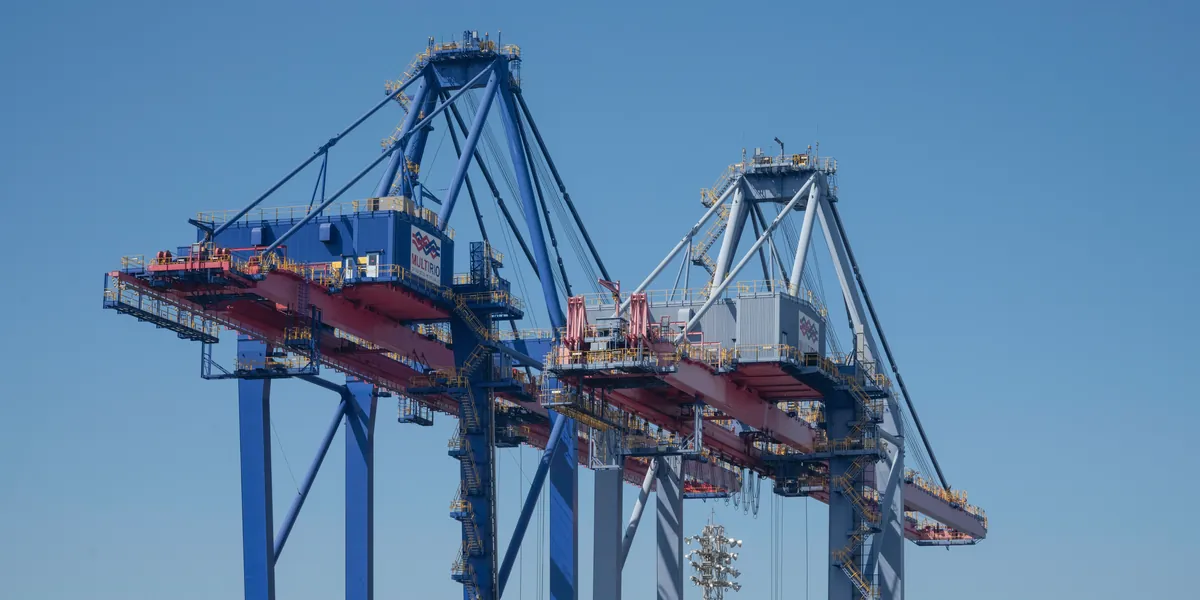
Two ship-to-shore container cranes at the TECON-RJ container terminal, Port of Rio de Janeiro, against a clear sky.
Port call guide · Rio de Janeiro, Brazil

Port of Rio de Janeiro

The Port of Rio de Janeiro, on Guanabara Bay, is run by PortosRio (Companhia Docas do Rio de Janeiro), the port authority for the public ports of Rio de Janeiro State. Its 6.8 km of quay and 29 berths include the Gamboa and São Cristóvão quays and the TECON-RJ container and Ro-Ro terminals at Caju, and in 2025 it handled 16.9 million tonnes of cargo.

22°53'31"S 43°11'43"W15

Photo: Container cranes at the Port of Rio de Janeiro, Brazil 2 by Wilfredor, CC0. Cropped and darkened by Costa Maritime.

Port of Rio de Janeiro at a glance

Key facts for planning a call at the Port of Rio de Janeiro, with numbered sources
Port authority(Autoridade Portuária (PortosRio, Companhia Docas do Rio de Janeiro))

PortosRio (Companhia Docas do Rio de Janeiro, CDRJ), the port authority for the public ports of Rio de Janeiro State: Rio de Janeiro, Itaguaí, Niterói, Forno and Angra dos Reis.1, 2

portosrio.gov.br

Harbour master(Capitania dos Portos do Rio de Janeiro, NPCP-RJ)

Capitania dos Portos do Rio de Janeiro (CPRJ), Brazilian Navy, under the 1st Naval District. It issues the port rules, the NPCP-RJ (3rd revision in force since 4 Dec 2025, last modified 15 Jul 2026), and the TECON-RJ ramp-up portarias.3, 4, 5

Pilotage(Praticagem, Zona de Praticagem ZP-15)
  • Zona de Praticagem ZP-15, subzone 1 (Rio de Janeiro and Niterói): Guanabara Bay inside the line Ponta de Copacabana, Ilha do Pai, Ilha da Mãe and Ponta de Itaipu. Pilotage is compulsory.
  • Under Lei 9.537/1997 as amended by Lei 14.813/2024, pilotage is compulsory in all pilotage zones for vessels over 500 GT, except cases set by the maritime authority (NORMAM-311/DPC lists the exempt vessels in item 4.4.3) and Brazilian-flag regional craft, pushers and barges classed only for inland navigation.
  • Vessels exempt from pilotage may not use the Canal de Cotunduba, except in emergencies.
  • Two pilots are required for night manoeuvres in the Canal de Cotunduba (whatever the ship's size), for TECON-RJ manoeuvres with LOA over 295 m or beam over 42 m, and for tankers leaving the oil terminal astern through the TECON-RJ channel.
  • Pilot station: Atalaia Rio de Janeiro, radio call 'Praticagem Rio', VHF channel 12.
  • The ZP-15 pilot companies and associations are listed in NPCP-RJ Annex C; Praticagem do Brasil lists the Praticagem Rio de Janeiro companies and Serviços de Praticagem New Pilots.6, 7, 4, 8, 3
Maximum permissible draft(Calado Máximo Operacional (CMO), IN GERQUA 14.001.08 e NPCP-RJ)
  • As of 22 October 2026. Maximum operational draft (Calado Máximo Operacional, CMO, also called CMR) set by PortosRio IN GERQUA 14.001.08 v8.0 (in force 10 Apr 2026) and repeated in the Capitania's NPCP-RJ, 3rd revision, item 5.1.1.
  • Channels: Canal de Cotunduba (Canal Varrido) 15.85 m; ships drawing over 11.50 m use it with a pilot and in daylight only, except container ships on an experimental basis at night (see restrictions).
  • Barra Grande (Santa Cruz channel), day or night: 11.50 m; container ships bound for the Port of Rio 12.60 m when the sea state allows (Beaufort 1 or less in the IN; ‘green band’ of the environmental parameters in the NPCP-RJ).
  • PortosRio's dynamic draft system ReDRAFT (IN GERQUA 14.003 v2.1), for container ships over 11.5 m on this route, was authorised by the Capitania on an experimental basis, 180 days at a time; the last extension found is Portaria 31/CPRJ of 10 April 2025, and the NPCP-RJ does not include it, so ask the pilots whether it is in use. No fixed figure above 12.60 m is published.
  • TECON-RJ access channel and turning basin, ships up to 349 m LOA: 14.50 m, up to 15.30 m using the tide under the rules in force.
  • Portaria 27/CPRJ of 1 Apr 2025 made regular the manoeuvres of ships with LOA between 306.01 m and 335 m and beam up to 48.5 m at drafts up to 14.60 m, and of ships with LOA between 335.01 m and 349 m or beam between 48.51 m and 52.0 m at 13.80 m without tide and 14.60 m with tide.
  • Drafts between 14.61 m and 15.30 m are experimental Ramp-Up 3 manoeuvres for ships up to 349 m LOA and 52.00 m beam, using the tide from 14.51 m.
  • Container berths (TECON 3 and 2 MultiRio, TECON 1 and extension ICTSI): 15.30 m, subject to completion of the ramp-up.
  • Ro-Ro berths (MultiCar): TECON 5 12.20 m, TECON 4 12.50 m; their approach channels allow these drafts plus up to 0.50 m flood tide (max 12.70 m and 13.00 m).
  • Cais Comercial channel: bollards 36 to 110 10.30 m plus 0.70 m flood tide (max 11.00 m); bollards 110 to 129 9.00 m plus 0.70 m (max 9.70 m); bollards 129 to 205 8.50 m plus 0.50 m (max 9.00 m, LOA 185 m max); bollards 205 to DMC1 8.20 m plus 0.80 m (max 9.00 m).
  • Berths (Table I): Gamboa up to 10.50 m (Pátio 8/9 and Pátio 9), passenger terminal berths 1 and 2 8.90 m, wheat terminal 9.10 m, São Cristóvão up to 9.00 m, oil terminal 8.50 m, Manguinhos buoy berth 11.47 m.
  • At berths between bollards 36 and 129 a flood-tide allowance of up to 0.70 m applies only to departing ships and never above the channel draft.
  • Tankers for the oil terminal (bollards 197 to 205) have separate entry and exit drafts and routes.
  • Neither the IN nor the NPCP states the datum (reference level).3, 9, 4, 5, 10, 11
Maximum vessel size(Comprimento (LOA) e boca)
  • As of 22 October 2026.
  • TECON-RJ container and Ro-Ro terminals: max LOA 349 m; the TECON-RJ access channel takes ships up to 52.0 m beam and 349 m LOA.
  • Cais Comercial channel to the berths between bollards 129 and 205 (eastern Cais da Gamboa and Cais de São Cristóvão): max LOA 185 m.
  • Ships with draft over 8.20 m reaching Cais de São Cristóvão (bollards 197 to 216) via the TECON-RJ channel: max LOA 185 m.
  • Manguinhos buoy berth design ship (navio-tipo): LOA 190 m, beam 40 m, draft 11.47 m.
  • Portaria 27/CPRJ/2025 placed ships with LOA between 349.01 m and 367 m and beam up to 52.50 m in Ramp-Up 4, experimental manoeuvres conditional on new aids to navigation; PortosRio's port council recorded on 3 June 2026 that the first ship of 366 m LOA had already operated at the port, but the terms now in force for ships over 349 m LOA were not found in the documents read, so confirm them with the pilots before fixing.
  • No DWT limits published for the quays.3, 4, 5
Air draft(Calado aéreo (Ponte Rio-Niterói))
  • Rio-Niterói Bridge (Ponte Presidente Costa e Silva), span heights in NPCP-RJ 5.2: central span 60 m; right and left lateral spans 60 m; Ilha de Mocanguê spans and all other spans 19 m.
  • Ships with a greater air draft may not pass under the bridge. Speed under the bridge up to 7 kn.
  • The central span is compulsory for ships of 40,000 DWT or more, which need at least two tugs (TKM or ASD) of at least 60 t bollard pull with lines passed, and for oil platforms of any DWT, towed with lines passed as the Capitania sets, always as special manoeuvres.
  • Tankers, LPG and chemical carriers, or any other vessel of more than 5,000 and less than 40,000 DWT, without operating limitations and carrying dangerous cargo, pass under the spans next to the central span with two tugs (TKM or ASD) of at least 45 t bollard pull each, with lines passed or with the tugs escorting.
  • Any vessel over 2,000 GT with steering or propulsion limitations must pass under the bridge under tow with one pilot, as a special manoeuvre reported to the Capitania for a notice to mariners.
  • Ships bound for ports and terminals inside Guanabara Bay with an air draft of 55 m or more must give the Capitania a NOTAM from the regional air navigation service (Serviço Regional de Proteção ao Voo) covering entry, stay and departure.
  • The span limits matter only for berths inside (north of) the bridge.4
Tides(Tábua de marés (DHN, estação Ilha Fiscal))
  • Semidiurnal with diurnal inequality. Mean level about 0.7 m above chart datum (Z0 68.8 cm at the DHN Ilha Fiscal station).
  • At spring tides high water reaches about 1.3 m and low water about 0.0 m (spring range about 1.3 m). Spring tidal currents in the bay reach up to 1.5 kn.
  • DHN reference tide station: Ilha Fiscal (no. 50140, chart 1515).12, 13, 14
Berths and terminals(Cais e berços)
  • 6.8 km of quay with 29 berths (PortosRio).
  • Permitted drafts are set berth by berth (see maximum draft): up to 15.30 m at the container berths, subject to ramp-up, and down to 2.90 m at Armazém 18 on the Gamboa quay.
  • Quays: Cais da Gamboa (bollards 36 to 162, including passenger terminal berths 1 and 2), Cais de São Cristóvão (bollards 166 to 216), the TECON-RJ container and Ro-Ro terminals at Caju (TECON 5 and 4 MultiCar, TECON 3 and 2 MultiRio, TECON 1 and extension ICTSI, up to bollard 309), and the Manguinhos buoy berth.
  • Leased terminals: Píer Mauá (cruise passengers), Terminal de Trigo do Rio de Janeiro (wheat), Petrobras (offshore logistics support), Triunfo Logística (steel products, general cargo, offshore support), MultiCar Rio (vehicles, Ro-Ro), MultiRio and ICTSI Rio Brasil Terminal 1 (containers), ICONIC Lubrificantes and Ultracargo (liquid bulk), RDJ11 (general cargo and solid bulk).
  • Main imports: containers, wheat, steel products, zinc concentrate. Main exports: containers, pig iron, steel products, vehicles.15, 3, 4
Clearance authorities(Receita Federal, ANVISA, Polícia Federal e VIGIAGRO)
  • Customs: Alfândega da Receita Federal do Brasil no Porto do Rio de Janeiro, Av. Rodrigues Alves 81, 4th floor, Centro.
  • Health: ANVISA port post (Posto PVPAF RJ Porto), Av. Rodrigues Alves s/n, Armazéns 6 and 7; the free pratique certificate (CLP) is requested through Porto Sem Papel or Solicita between 48 and 24 hours before arrival.
  • Immigration and crew changes: Polícia Federal, which carries out maritime police and migration control at ports (Lei 13.445/2017, art. 38).
  • Agriculture: VIGIAGRO (MAPA); the Rio de Janeiro unit MAPA lists is the Serviço de Vigilância Agropecuária Internacional do Rio de Janeiro (SEV-RIO), Ponta do Galeão.16, 17, 18, 19, 20
Crew change airport(Aeroporto Internacional do Rio de Janeiro/Galeão)
  • Rio de Janeiro/Galeão, Antônio Carlos Jobim International Airport (IATA GIG, ICAO SBGL), an international airport.
  • About 16 km by road from the port, roughly 17 minutes without traffic (approximate route on OpenStreetMap data from the PortosRio port coordinate).21, 22, 23
Dredged depth and access channel(Canal de Cotunduba, Barra Grande e bacia de evolução)
  • Main entrance channel (Canal da Cotunduba): one-way, swept to 17 m, 200 m wide and 18.5 km long, starting near Ponta de Copacabana and ending near the LNG pier.
  • Secondary entrance: Canal de Santa Cruz, a natural passage about 1,200 m wide between Ponta de Santa Cruz and Ilha da Laje.
  • The Port of Rio access channel and the TECON-RJ channel are one-way; the TECON-RJ turning basin is 558 m in diameter, keeping 60 m off the quay face.15, 3
Anchorages(Fundeadouros da Baía de Guanabara)
  • As of 22 October 2026. Guanabara Bay anchorages are set in NPCP-RJ 5.5, Table 15 (Fundeadouros da Baía de Guanabara); the NPCP warns of many no-anchoring areas marked on the charts.
  • Area 1: temporary, for health, customs and maritime police inspection.
  • Area 6: cargo operations, ships awaiting berth, minor repairs, litigation or out of service.
  • Area 7: ships with dangerous goods (near Ilha Tavares).
  • Area 10: preferential for LNG ships.
  • Area 13 (Ilha Rasa): degraded ships, ships putting in with damage or with drafts too deep to cross the bar, or port congestion; ask the Capitania for authorization at least 48 h ahead (except ships putting in), as no ship may anchor there without the Capitania's knowledge; stay up to 48 h, which the Capitania may extend on request.
  • Area 15: quarantine anchorage outside Guanabara Bay, where ships stay until released by ANVISA.4
Restrictions(Restrições às manobras)
  • As of 22 October 2026.
  • Canal de Cotunduba (Canal Varrido): closed to vessels exempt from pilotage, except in emergencies; ships drawing over 11.50 m transit in daylight only, except container ships, which may transit at night on an experimental basis within LOA under 367 m, beam under 52.50 m and draft under 15.30 m (NPCP-RJ, citing Portaria 27/CPRJ/2025).
  • Barra Grande: ships up to 11.50 m draft day and night; container ships up to 12.60 m day and night when the sea state allows; ships with beam over 25 m may not pass each other between Ilha da Laje and Ponta de Santa Cruz.
  • Entering or leaving the bay with LOA over 335 m, with beam over 48.5 m up to 52 m, or with draft over 12.60 m via the Canal de Cotunduba: daylight only.
  • Ships up to 335 m LOA and 48.5 m beam drawing over 12.60 m enter between sunrise and 1 h before sunset and depart between 30 min before sunrise and 2 h before sunset; larger ships enter and depart between sunrise and 2 h before sunset (times rounded to the half or full hour).
  • Ships up to 335 m LOA and 48.5 m beam may move between TECON-RJ and the inner anchorage at any hour, whatever the draft.
  • Port of Rio access channel: one-way; outbound ships have priority unless the ships agree otherwise.
  • TECON-RJ channel: one-way and preferential over the Cais Comercial channel; TECON-RJ container ships and MultiCar Ro-Ro ships have priority.
  • Ships with draft over 8.20 m going to Cais de São Cristóvão via the TECON-RJ channel (LOA up to 185 m): LOA between 120 m and 150 m day or night, LOA over 150 m daylight only.
  • Speed limits (NPCP-RJ 5.2, Table 14, either direction): 10 kn between the bay entrance and Ilha de Boa Viagem (container ships 11 kn) and in the Canal de Cotunduba (container ships 13 kn); 7 kn between Ilha de Boa Viagem and the Rio-Niterói Bridge and in the Port of Rio access channel; up to 7 kn under the bridge; 8 kn north of the bridge.
  • No anchoring, mooring or staying within 200 m of the Rio-Niterói Bridge piers.
  • AIS must stay on at all times in the organized port area.
  • No vessel age restriction found.4, 3, 15, 5
Tugs(Rebocadores)
  • As of 22 October 2026. Minimum tugs at the Port of Rio (NPCP-RJ 5.1.1 b VIII), by quay.
  • Cais da Gamboa: LOA up to 165 m and draft up to 8 m, 2 conventional tugs with steerable Kort nozzle (TKM) of at least 43 t bollard pull each; LOA over 165 m up to 200 m and draft up to 8 m, 2 TKM tugs of at least 43 t each when berthing port side to or unberthing starboard side to (no turn), and 1 azimuth and 1 TKM tug of at least 43 t, or 3 TKM tugs if no azimuth tug is available, when berthing starboard side to or unberthing port side to (with turn); LOA over 200 m or draft over 8 m, 2 azimuth tugs of at least 43 t.
  • Cais de São Cristóvão: LOA up to 120 m, 2 tugs of at least 40 t each; LOA over 120 m up to 150 m, 3 tugs of at least 40 t each, or 2 if the ship has a bow thruster; LOA over 150 m up to 165 m (daylight manoeuvres), 3 tugs of at least 40 t each including 2 azimuth, or 2 azimuth tugs if the ship has a bow thruster; LOA over 165 m up to 185 m (daylight manoeuvres), the same, provided no ship with beam over 30 m is berthed between bollards 150 and 178; tankers at the oil terminal (LOA up to 185 m), 3 tugs of at least 45 t each, 2 azimuth and 1 TKM with more than one shaft.
  • TECON-RJ container and Ro-Ro terminals, drafts up to 13 m: LOA over 290 m, 4 tugs totalling 160 t bollard pull without thruster or 3 totalling 140 t with thruster; LOA over 250 m up to 290 m or between 60,001 and 80,000 DWT, 3 tugs totalling 140 t without thruster or 120 t with thruster; LOA over 200 m up to 250 m or between 40,001 and 60,000 DWT, 3 tugs totalling 90 t without thruster or 2 azimuth tugs totalling 80 t with thruster; LOA over 155 m up to 200 m, 2 azimuth tugs totalling 80 t; LOA 155 m or less, 2 tugs totalling 80 t; Ro-Ro, 2 azimuth tugs totalling 80 t; offshore supply vessels and PLSVs normally none.
  • Larger TECON-RJ ships, all tugs azimuth: LOA over 335 m up to 349 m or beam over 48.5 m up to 52 m, 2 tugs of 70 t and 2 of 60 t; other ships with LOA over 295 m or beam over 42 m, 2 of 60 t and 2 of 55 t.
  • These sets apply at drafts up to 14.60 m (NPCP-RJ, tide from 14.50 m) and in Ramp-Up 3 manoeuvres up to 15.30 m (Portaria 27/CPRJ/2025, tide from 14.51 m), where ships up to 295 m LOA and 42 m beam at drafts between 13.01 m and 15.30 m also take 2 of 60 t and 2 of 55 t.
  • Ramp-Up 4 ships (LOA between 349.01 m and 367 m): 1 tug of 80 t, 1 of 70 t and 2 of 60 t, all azimuth (Portaria 27/CPRJ/2025).
  • Manguinhos buoy berth: 4 tugs of 45 t, 3 azimuth and 1 TKM for mooring, 2 azimuth and 2 TKM for unmooring.
  • The master, advised by the pilot, may ask for another configuration; offshore support and passenger vessels are not obliged to use tugs.4, 5
Pilot boarding(Ponto de embarque de prático)
  • Pilot boarding positions (Ponto de Embarque de Prático) in NPCP-RJ 5.1.1 a: Canal de Cotunduba 22°59.80'S 043°08.70'W; Barra Grande 22°56.50'S 043°08.40'W.
  • Pilot station: Atalaia Rio de Janeiro, radio call 'Praticagem Rio', VHF channel 12.
  • The notice required for pilot requests was not found in the documents read.4, 3
Weather limits(Condicionantes ambientais (vento, corrente e visibilidade))
  • As of 22 October 2026.
  • Bar impracticability for Guanabara Bay (NPCP-RJ 4.3.7, Quadro 1): green band, significant wave height (Hs) up to 1.5 m, wind up to 15 kn and visibility at least 1.0 nm, full practicability; yellow band, Hs over 1.5 m and under 2.5 m, wind over 15 kn and under 30 kn, or visibility over 0.5 nm and under 1.0 nm, when the Capitania may declare the bar partly or totally impracticable; red band, Hs 2.5 m or more, wind 30 kn or more, or visibility 0.5 nm or less, total impracticability.
  • These limits also apply to ships exempt from pilotage unless the declaration says otherwise.
  • Port of Rio standing limits (NPCP-RJ 5.1.1 b VII): access to the Cais Comercial, wind up to 20 kn and visibility at least 2 nm; tankers bound for the oil terminal, wind up to 15 kn, and up to 10 kn when leaving astern via the TECON-RJ channel; access to TECON-RJ, wind up to 15 kn, current up to 0.6 kn, visibility at least 2 nm; wind limited to 10 kn between the mooring dolphin and bollard 277 when ships are berthed there.
  • TECON-RJ berthing and unberthing: wind up to 15 kn (gusts excluded) and visibility at least 2.00 nm as reference limits (IN 14.001.08 v8.0).
  • Ramp-Up manoeuvres (Portaria 27/CPRJ/2025): wind limit 15 kn for Ramp-Up 3 and 12 kn for Ramp-Up 4; current limited to 0.6 kn; visibility at least 2 nm.
  • Manguinhos buoy berth: mooring and unmooring in daylight with wind up to 16 kn.
  • Container ships using Barra Grande at drafts up to 12.60 m need a sea state of Beaufort 1 or less (IN) or in the green band (NPCP-RJ, above).4, 3, 5
Bunkers, fresh water and waste reception(Combustível, água e resíduos)
  • Bunkering and lubricant supply by pumping (by barge or by road) and oily waste removal are allowed only through companies registered with PortosRio, with a preventive oil boom around the ship for the whole operation, laid by an independent company registered with PortosRio and not by the supplier.
  • The agent or owner must send PortosRio a prior request listing the products and, before berthing, name the contracted companies.
  • Oily waste removal companies must be accredited under ANTAQ Resolution 2190/2011.
  • No bunkering or liquid bulk operations during operations with Class 1 (explosives) or Class 5 (oxidizing substances) dangerous goods.
  • Fresh water supply not verified.24, 25
Line-up(Programação de navios (line-up))

PortosRio publishes the ship line-up (Programação de Navios) in its SILOG system.26

PortosRio line-up: Port of Rio de Janeiro

Main cargo and throughput(Movimentação de cargas)

16,905,773 t gross cargo weight in 2025, 21.1% of the 80.2 million t handled by the five PortosRio ports. Container volumes at Rio fell in 2025.27

For planning reference only, not for navigation. Drafts depend on tide, under-keel clearance, ship type and the current port authority and Capitania dos Portos rules; the pilots and the Capitania have the final word. Confirm before fixing the vessel. Our operations desk can obtain the current figure from the pilots.

Planning a call at Rio de Janeiro

  • Choose the entrance by draft: the Canal de Cotunduba takes up to 15.85 m, with ships drawing over 11.50 m in daylight only (container ships may transit at night on an experimental basis), and the Barra Grande takes 11.50 m day or night, or 12.60 m for container ships when the sea state allows.
  • At TECON-RJ ships up to 349 m LOA and 52.0 m beam take 14.50 m, or up to 15.30 m using the tide, but drafts above 14.60 m are still experimental (Portaria 27/CPRJ/2025); the first 366 m ship called in 2026, under terms the pilots confirm per call.
  • Ships entering or leaving the bay with LOA over 335 m, beam over 48.5 m or a draft over 12.60 m via the Canal de Cotunduba move in daylight only, within windows set in the Capitania's NPCP-RJ.
  • The Rio-Niterói Bridge spans give 60 m at the central and lateral spans and 19 m elsewhere; ships of 40,000 DWT or more use the central span, and ships with an air draft of 55 m or more bound for terminals inside Guanabara Bay give the Capitania a NOTAM.
  • The Capitania may declare the bar partly or totally impracticable with waves over 1.5 m, wind over 15 knots or visibility under 1.0 nm, and declares it totally impracticable with waves of 2.5 m or more, wind of 30 knots or more or visibility of 0.5 nm or less (NPCP-RJ).

Before arrival, your agent requests free pratique (CLP) from ANVISA through Porto Sem Papel between 48 and 24 hours before arrival and, for bunkering, sends PortosRio the prior request listing the products and names the contracted companies before berthing.

Port of Rio de Janeiro: frequently asked questions

What is the maximum draft at the Port of Rio de Janeiro?

Under PortosRio's IN GERQUA 14.001.08 v8.0, in force since 10 April 2026 and repeated in the Capitania's NPCP-RJ, the maximum operational draft is 15.85 m in the Canal de Cotunduba and 11.50 m at the Barra Grande, or 12.60 m for container ships when the sea state allows. TECON-RJ takes 14.50 m, up to 15.30 m using the tide, and drafts above 14.60 m are still experimental. Neither document states the datum, so the pilots confirm the draft for each call.

What is the air draft limit for the Port of Rio de Janeiro?

The Rio-Niterói Bridge gives 60 m at the central span and at the right and left lateral spans, and 19 m at the Ilha de Mocanguê spans and all others (NPCP-RJ, item 5.2). Ships with a greater air draft may not pass under it, speed under the bridge is limited to 7 knots, and ships of 40,000 DWT or more must use the central span.

Which entrance do ships use to reach the Port of Rio de Janeiro?

There are two. The Canal de Cotunduba (Canal Varrido) is one-way, swept to 17 m and takes drafts up to 15.85 m, but it is closed to vessels exempt from pilotage, and ships drawing over 11.50 m use it in daylight only, except container ships on an experimental basis at night. The Barra Grande, between Ponta de Santa Cruz and Ilha da Laje, takes 11.50 m day or night.

What is the TECON-RJ ramp-up at the Port of Rio de Janeiro?

It is the Capitania's programme of test manoeuvres for large container ships at TECON-RJ. Under Portaria 27/CPRJ of 1 April 2025, manoeuvres at up to 14.60 m are regular for ships up to 349 m LOA and 52.0 m beam, and drafts between 14.61 m and 15.30 m are experimental Ramp-Up 3 manoeuvres. Ships between 349.01 m and 367 m LOA form Ramp-Up 4; the first 366 m ship called in 2026, and the pilots confirm the terms per call.

Where do ships in quarantine anchor at the Port of Rio de Janeiro?

At anchorage area 15, outside Guanabara Bay, where they stay until ANVISA releases them (NPCP-RJ, Table 15). Area 13, off Ilha Rasa, takes damaged ships, ships too deep to cross the bar and ships waiting during port congestion, on request to the Capitania at least 48 hours ahead.

Working with Costa Maritime at Rio de Janeiro

At Rio de Janeiro, a vetted local partner attends the vessel on our behalf. You deal only with Costa Maritime: we prepare your PDA and FDA and remain your single point of contact.

Proforma disbursement account (PDA)

Send the vessel type, GT and NT, LOA, beam and drafts, the purpose of the call, the cargo and the expected days in port, and we prepare your proforma disbursement account.

Request a PDA for Rio de Janeiro

The PDA is an estimate based on the particulars you send and the tariffs and exchange rate in force; the final disbursement account (FDA) reflects the actual call.

Sources

  1. Quem somos, PortosRio. Accessed 21 October 2026.
  2. Institucional (Acesso à Informação), PortosRio. Accessed 21 October 2026.
  3. IN GERQUA 14.001.08 v8.0, PortosRio, 24 April 2026 (in force 10 April 2026). Accessed 21 October 2026.
  4. NPCP-RJ, 3ª Revisão, Modificações 1 a 3, Capitania dos Portos do Rio de Janeiro (Marinha do Brasil), 15 July 2026 (Modificação 3); 3ª Revisão in force 4 December 2025. Accessed 21 October 2026.
  5. Portaria nº 27/CPRJ, de 1º de abril de 2025 (Ramp-Up TECON-RJ), Capitania dos Portos do Rio de Janeiro (copy published by PortosRio), 1 April 2025. Accessed 21 October 2026.
  6. Zonas de Praticagem (ZP-15), Praticagem do Brasil (Conselho Nacional de Praticagem). Accessed 21 October 2026.
  7. Lei nº 14.813, de 15 de janeiro de 2024, Câmara dos Deputados (Legislação Informatizada), 15 January 2024. Accessed 21 October 2026.
  8. Praticagem Rio de Janeiro, Praticagem Rio de Janeiro, 2026 (site). Accessed 21 October 2026.
  9. IN GERQUA 14.001.08 versão 8.0 (listing page, replaces versão 7.0), PortosRio, 10 April 2026 (início da vigência). Accessed 21 October 2026.
  10. IN GERQUA 14.003 v2.1, Utilização de Software de Calado Dinâmico, PortosRio, 21 November 2024 (in force 12 November 2024; next review 11 November 2026). Accessed 21 October 2026.
  11. Portaria CPRJ nº 31, de 10 de abril de 2025 (prorrogação do ReDRAFT), na lista de normas da Capitania, Marinha do Brasil, Capitania dos Portos do Rio de Janeiro (CPRJ), 10 April 2025. Accessed 22 October 2026.
  12. Características Ambientais da Área de Influência: Porto do Rio de Janeiro, PortosRio (CDRJ), 13 November 2015 (PDF creation date). Accessed 21 October 2026.
  13. PDZ do Porto do Rio de Janeiro, informações geográficas, PortosRio (CDRJ), 2016. Accessed 21 October 2026.
  14. F-41 Descrição de Estação Maregráfica: Ilha Fiscal 50140, Diretoria de Hidrografia e Navegação (copy hosted by PortosRio), updated 10 September 2013. Accessed 21 October 2026.
  15. Porto do Rio de Janeiro: História e características, PortosRio, 23 September 2026 (Atualizado em). Accessed 21 October 2026.
  16. Quem é Quem: Alfândegas, Rio de Janeiro, Receita Federal do Brasil. Accessed 21 October 2026.
  17. Mapa: Rio de Janeiro (unidades da Anvisa), Anvisa, 15 July 2025 (Modificado em). Accessed 21 October 2026.
  18. Solicitar Certificado de Livre Prática, Gov.br / Anvisa, 15 December 2025 (Última Modificação). Accessed 21 October 2026.
  19. Lei nº 13.445, de 24 de maio de 2017 (Lei de Migração), Câmara dos Deputados (Legislação Informatizada), 24 May 2017. Accessed 21 October 2026.
  20. DIGRV-SE: Divisão de Gestão Regional do Vigiagro Sudeste, Ministério da Agricultura e Pecuária (MAPA), 17 July 2026 (Atualizado em). Accessed 21 October 2026.
  21. AISWEB aerodrome SBGL (D-AMDT 41/26), DECEA. Accessed 21 October 2026.
  22. IATA Airline and Airport Code Search: GIG, IATA. Accessed 21 October 2026.
  23. OSRM driving route, port coordinate to SBGL, Project OSRM (OpenStreetMap data). Accessed 21 October 2026.
  24. IN DIRNES 15.004 v6.0.0, Prevenção à poluição por óleo, PortosRio, 6 May 2026 (in force 5 May 2026). Accessed 21 October 2026.
  25. Instrumentos Normativos da PortosRio (lista), PortosRio. Accessed 21 October 2026.
  26. Programação de navios, PortosRio. Accessed 21 October 2026.
  27. Relatório Anual 2025 / Relato Integrado (ago/2026), PortosRio (Companhia Docas do Rio de Janeiro), 2026-08. Accessed 21 October 2026.

Last reviewed: October 2026

Planning a call at Rio de Janeiro?

Send the vessel particulars and the dates. We prepare the PDA and coordinate the call with one point of contact.